

Charter’s stock price has taken a beating over the past six months, shedding 35.3% of its value and falling to $153.25 per share. This may have investors wondering how to approach the situation.
Is now the time to buy Charter, or should you be careful about including it in your portfolio? Get the full stock story straight from our expert analysts, it’s free.
Why Do We Think Charter Will Underperform?
Even though the stock has become cheaper, we don’t have much confidence in Charter. Here are three reasons why CHTR doesn’t excite us, plus one stock we’d rather own.
1. Weak Growth in Internet Subscribers Points to Soft Demand
Revenue growth can be broken down into changes in price and volume (for companies like Charter, our preferred volume metric is internet subscribers). While both are important, the latter is the most critical to analyze because prices have a ceiling.
Charter’s internet subscribers came in at 29.39 million in the latest quarter, and over the last two years, averaged 2.5% year-on-year growth. This performance was underwhelming and suggests it might have to lower prices or invest in product improvements to accelerate growth, factors that can hinder near-term profitability. 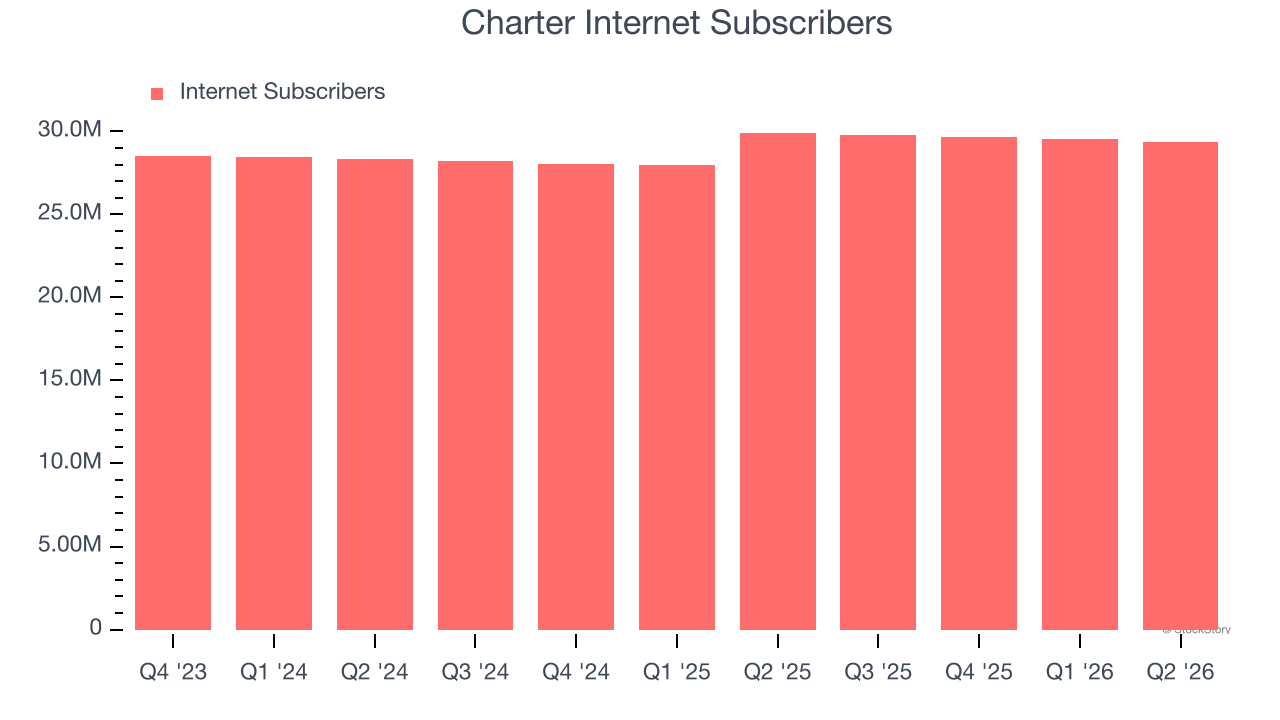
2. Mediocre Free Cash Flow Margin Limits Reinvestment Potential
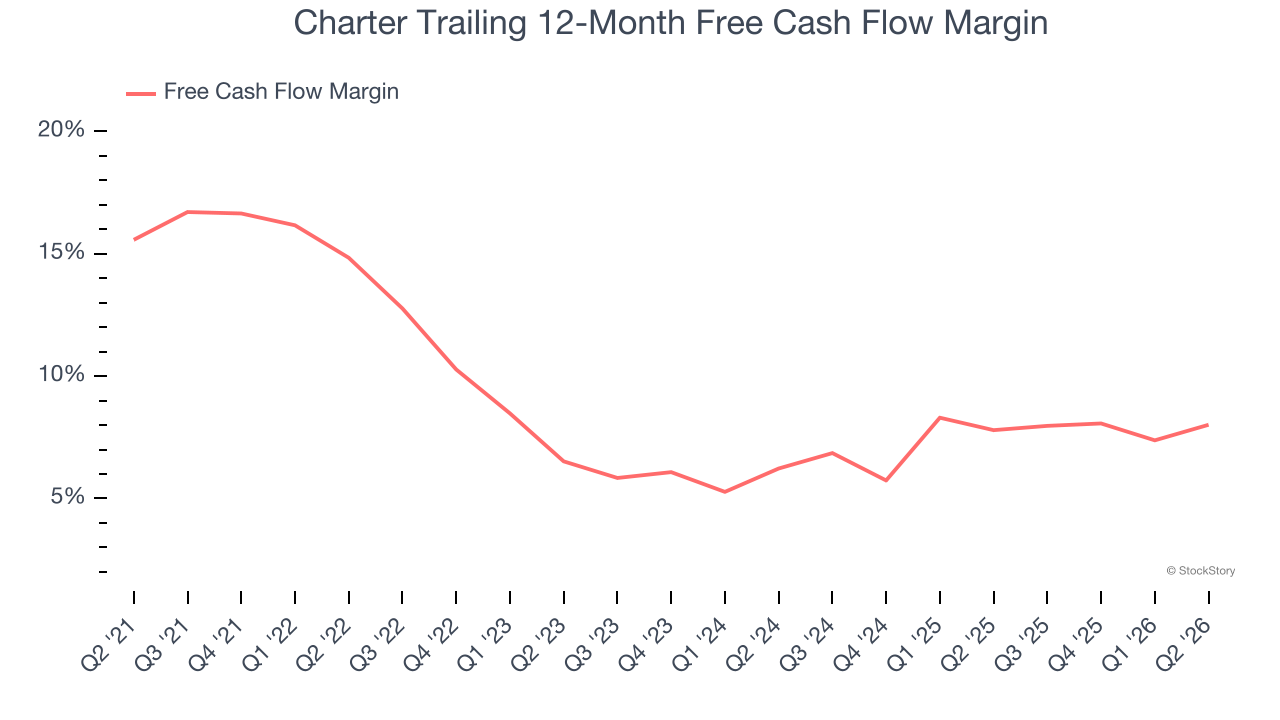
If you’ve followed StockStory for a while, you know we emphasize free cash flow. Why, you ask? We believe that in the end, cash is king, and you can’t use accounting profits to pay the bills.
Charter has shown poor cash profitability relative to peers over the last two years, giving the company fewer opportunities to return capital to shareholders. Its free cash flow margin averaged 7.9%, below what we’d expect for a consumer discretionary business.
3. New Investments Aren’t Moving the Needle
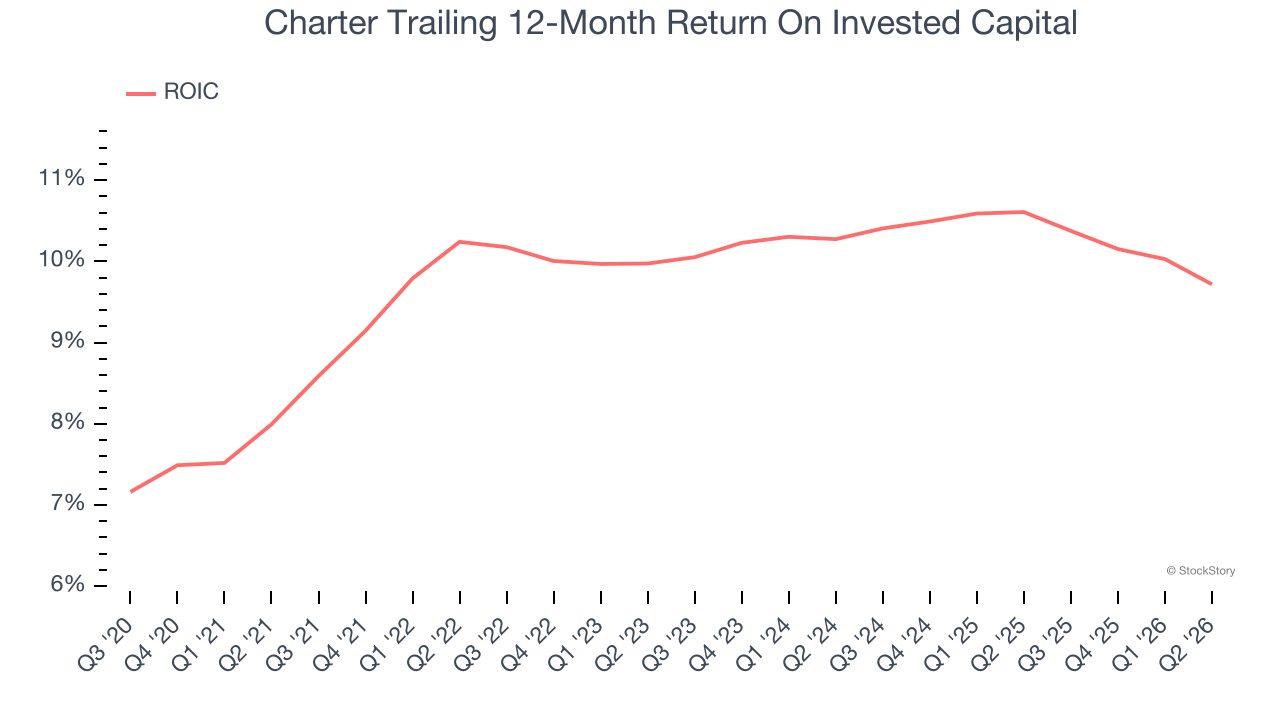
ROIC, or return on invested capital, is a metric showing how much operating profit a company generates relative to the money it has raised (debt and equity).
Unfortunately, Charter’s ROIC has stayed the same over the last few years. If the company wants to become an investable business, it must improve its returns by generating more profitable growth.
Final Judgment
We see the value of companies helping consumers, but in the case of Charter, we’re out. After the recent drawdown, the stock trades at 3.6× forward P/E (or $153.25 per share). While this valuation is optically cheap, the potential downside is huge given its shaky fundamentals. There are better stocks to buy right now. We’d suggest looking at one of our top digital advertising picks.
High-Quality Stocks for All Market Conditions
ONE MORE THING: Top 5 Growth Stocks. The biggest stock winners almost always had one thing in common before they ran. Revenue growing like crazy. Meta. CrowdStrike. Broadcom. Our AI flagged all three. They returned 315%, 314%, and 455%, respectively.
Find out which 5 stocks it’s flagging this month — FREE. Get Our Top 5 Growth Stocks for Free HERE.
Stocks that have made our list include now familiar names such as Nvidia (+1,460% between June 2020 and June 2025) as well as under-the-radar businesses like the once-small-cap company Exlservice (+271% between June 2020 and June 2025). Find your next big winner with StockStory today.